


Changes — this word best describes everything we discussed at the AUDIT & RISK INNOVATIONS 2025 conference, held on March 20, thanks to Business Format. Today, like the rest of the world, Ukraine is undergoing significant transformations, and the fields of audit and risk management are no exception.
Artificial intelligence is unlocking new opportunities, regulatory requirements are constantly evolving, and the speed of decision-making is more critical than ever. How to adapt to these changes, integrate modern technologies, and ensure effective risk management — these were the key questions explored by conference participants.
Forum Agenda
1. KEYNOTE PANEL: LEGISLATIVE LANDSCAPE AND INTERNATIONAL AUDIT STANDARDS
Internal Audit in Ukraine: Adapting to New Rules and Challenges
Olena Avramenko – Director of the Internal Audit Department, National Bank of Ukraine
Olena shared insights on how the role of internal audit has evolved from a traditional oversight function to a strategic partnership that not only identifies risks but also helps organizations stay ahead of them.
A key focus was on the National Bank of Ukraine’s experience during the war: Auditors continued their work under stress and uncertainty, utilizing remote monitoring methods, online risk assessments, and enhanced communication with management. Despite the challenges, they successfully executed 100% of the annual audit plan by adapting it to emerging priorities, including risk management, cybersecurity, and ESG factors.
Key takeaways: Internal audit must be flexible, tech-savvy, and future-oriented. During times of crisis-driven stability, it should drive change by adopting agile auditing, continuous auditing, and leveraging artificial intelligence. The discussion emphasized that the auditor of the future is not just an analyst but also an innovator, strategist, and mentor who helps organizations navigate change.
Emerging Trends and Challenges in Internal Audit
Dmytro Lazuchenko – Partner, Head of Technology Risk, EY Ukraine
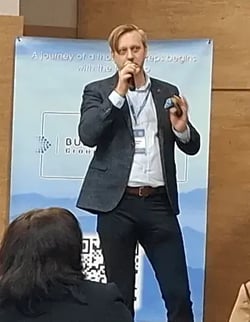
Dmytro’s presentation focused on digitalization, automation, and cybersecurity, which are reshaping audit practices today.
A key theme was the integration of artificial intelligence (AI) and machine learning (ML) in auditing. The use of automated analytics and risk prediction technologies optimizes control testing, enhances audit accuracy, and reduces manual work.
A separate segment was dedicated to cyber risk assessment. The speaker emphasized that modern auditing must include information security analysis, access management, and risk-based control testing. The adoption of SaaS solutions, CI/CD processes, and new risk management technologies necessitates a shift in traditional audit methods and data control approaches.
Main takeaway: Internal audit is no longer just a compliance tool—it must become a strategic business partner, integrating the latest technologies and ensuring organizational agility in an evolving risk environment.
Internal Audit’s Interaction with the Supervisory Board
Dmytro Serhiyenko – Director of the Internal Audit Department, Ukrzaliznytsia

Dmytro highlighted that effective collaboration between internal audit and the supervisory board is key to transparent risk management, financial oversight, and strategic company development.
The discussion focused on implementing new internal audit standards that define its relationship with the board. These standards emphasize that the board must:
- Empower internal audit with a clear mandate
- Ensure its independence
- Oversee its effectiveness
Dmytro stressed that unrestricted access to information, executive support, and well-defined authority are crucial for high-quality audit execution.
Key challenges include delays in information sharing, lack of attention to audit findings, and limited resources. To address these issues, stronger collaboration with management, regular engagement with the board, and an enhanced role for internal audit as a strategic partner are needed.
Main takeaway: Internal audit should not only identify risks but also actively contribute to developing and implementing solutions, working closely with the board and leadership.
Legislative Initiatives on Internal Audit
Nadiya Pavlova – Managing Partner, ATTORNEYS Law Firm
The conference featured an analysis of Ukraine’s efforts to regulate the internal audit profession. Nadiya outlined key aspects of the proposed amendments to the Law on Financial Reporting Audit and Auditing Activities, published by the Ministry of Finance in February 2025.
The primary goal of these amendments is to align with EU audit directives, establish a registry of internal auditors, and set qualification requirements for professionals. Special attention was given to certification, professional competence, and concerns over the unclear role of internal auditors within the regulatory framework.
Nadiya emphasized that the proposed legal framework requires further refinement to ensure better alignment with international standards and to support the development of the internal audit profession in Ukraine.
2. FOCUS TOPIC: AI/AGI?/ASI? IN AUDIT
The Role of AI in Audit Processes
Anastasia Konopliova – Owner & Director, LLC UAG
Anastasia focused on AI’s potential in financial analysis, risk assessment, and the automation of audit procedures.
A key discussion point was the effectiveness of language models in audit processes. She demonstrated how AI can rapidly process large volumes of financial data, detect anomalies in reports, and predict risks. The impact of AI on audit accuracy was also examined, highlighting its role in reducing human error and optimizing resource allocation.
Special attention was given to security and ethical concerns:
-
How reliable is AI in making critical decisions?
-
What risks come with its use?
-
How can organizations prevent data bias in analysis?
3. CASE SESSION: INNOVATIVE TOOLS & TECHNOLOGIES IN AUDIT
GPTs as AI Consultants in Audit
Oleksandr Borovynskyi – Senior Manager, Internal Audit Directorate, Metinvest Holding
Oleksandr explored the application of generative language models in business processes and their efficiency in data analysis and expert assessments.
His presentation showcased real-world applications of AI assistants at different levels:
- Microsoft Copilot tools (e.g., transcribing meetings, trend analysis in Excel, email translation in Outlook)
- Specialized AI solutions trained on regulatory documents and open data sources
A standout case study demonstrated the use of GPTs for evaluating repair projects, which helped minimize conflicts of interest among contractors and optimize costs. Thanks to GPT-driven calculations, total repair expenses were reduced by 34%.
AI Governance System (AIGS): What It Is and How to Implement It
Volodymyr Tkachenko – Director, Active Audit Agency
Volodymyr examined AI’s role in big data analysis, document automation, forecasting socio-economic trends, and improving decision-making transparency.
He shared successful real-life AI applications in:
- Urban planning
- Social protection programs
- Anti-corruption initiatives
A key focus was on ethical considerations, data privacy, and the need for regulatory frameworks. Volodymyr emphasized that while AI can significantly enhance government efficiency, its implementation requires a well-balanced approach and strong oversight.
4. CASE SESSION: NEW STANDARDS & QUALITY ASSESSMENT IN INTERNAL AUDIT
Evaluating Internal Audit Quality Under New Standards
Vadym Radko – Head of Audit Methodology & Quality Assessment Group, Naftogaz Group
Vadym discussed how AI is transforming businesses by automating processes, optimizing costs, and enhancing decision-making. He explored AI applications in:
-
Finance (fraud detection, risk forecasting)
-
Marketing (content personalization, targeted advertising)
-
Operations (logistics optimization, inventory management)
The presentation featured real-world case studies:
-
Chatbots reduced response time by 60%
-
Predictive algorithms cut transportation costs by 25%
-
GPT models helped analyze market trends
However, Vadym also highlighted key challenges, including algorithmic bias, legal risks, and potential job displacement. He emphasized that successful AI implementation requires a strategic approach tailored to business needs.
Legislative Changes in Internal Audit
Natalia Stepanova – Head of Internal Audit Service, JSC NSTU
Natalia covered the mandatory buyout of shares (squeeze-out) under Article 109 of the Ukrainian Joint Stock Companies Law. She outlined the main challenges, such as:
-
The risk of undervaluing shares
-
Restrictions on minority shareholders' rights
-
Potential abuses by majority shareholders
At the same time, the mechanism benefits major shareholders by simplifying business consolidation and strengthening corporate governance. Natalia emphasized the need for improved share valuation procedures and legal precedents to protect all market participants.
Collaboration Between External & Internal Audit
Dmytro Sushko – Managing Partner, MGI PSP Audit Group
Dmytro examined ISA 610 – Using the Work of Internal Auditors and its role in aligning external and internal audit functions. He focused on key conditions under which external auditors can rely on internal audit work and the criteria for assessing its competence and objectivity.
The presentation also analyzed risks associated with over-reliance on internal auditors and stressed the importance of maintaining professional skepticism. Dmytro concluded that effective collaboration between internal and external auditors enhances audit quality, but requires strict adherence to standards and independence principles.
5. RISK SESSION: RISK MANAGEMENT IN TIMES OF UNCERTAINTY
Risk Management in a Crisis Environment
Karolina Kompaniiets – Head of Internal Control Systems Department, Vodafone Ukraine

Using Vodafone Ukraine as a case study, Karolina outlined the major risks the telecom company faces during wartime, including:
-
Blackouts
-
Cybersecurity threats
-
Workforce retention
She highlighted key risk mitigation measures, such as:
-
Alternative energy solutions
-
Employee support programs
-
Strengthening cybersecurity through training & security audits
The session also covered remote work strategies and rapid decision-making. Karolina emphasized that flexibility, quick adaptation, and strategic planning are critical to overcoming crises.
Audit 360°: Innovative Information Gathering Technologies
Ihor Tsminskyi – Risk Management & Business Intelligence Expert, International Business Protection Holding
Ihor introduced the "Audit 360°" approach—a deep-dive intelligence methodology for analyzing businesses, individuals, processes, and risks. He stressed the importance of comprehensive background checks on business partners, especially when dealing with high-risk transactions or links to adversarial countries.
The session explored modern intelligence-gathering techniques, including:
-
OSINT aggregators
-
HUMINT capabilities
-
The intelligence cycle: planning, data analysis, and reporting
Ihor also emphasized the legal framework for audits and the necessity of using verified information sources for sound decision-making.
Managing HR Risks: Polygraph & Virtual Security Screening
Illia Aleksankin – Owner, STIMUL
Illia presented cutting-edge personnel screening technologies, including polygraphs and VirtualSB (Virtual Security Bureau). He explained how modern security methods can minimize HR risks, reduce corporate losses, and optimize security resource allocation based on job risk levels.
VirtualSB is an AI-powered pre-screening system that analyzes candidates' responses to risk-based questions and generates analytical reports. This allows companies to assess personnel reliability quickly without polygraph testing.
Key benefits:
-
Reduced theft & fraud risks
-
Enhanced security monitoring
-
Proactive threat prevention in HR security
6. SPECIAL CASE STUDY: BOOSTING EMPLOYEE PRODUCTIVITY THROUGH AUDIT
HR & Security Collaboration in Risk Management
Olena Chekushyna – Business Development Manager, MIDOT (Israel)

Olena showcased Midot’s automated tools for assessing employee integrity, minimizing internal fraud risks, and enhancing corporate culture. The session focused on integrating HR & security approaches to streamline and improve transparency in personnel screening.
Key takeaways:
-
Traditional risk assessment methods are costly, inefficient, and prone to internal conflicts
-
Algorithmic solutions like IntegriTEST & TRUSTEE can identify risks, prevent fraud, and improve employee motivation
The Hitachi case study demonstrated how enhancing employee satisfaction can directly improve financial performance.
Ethicontrol at the Conference
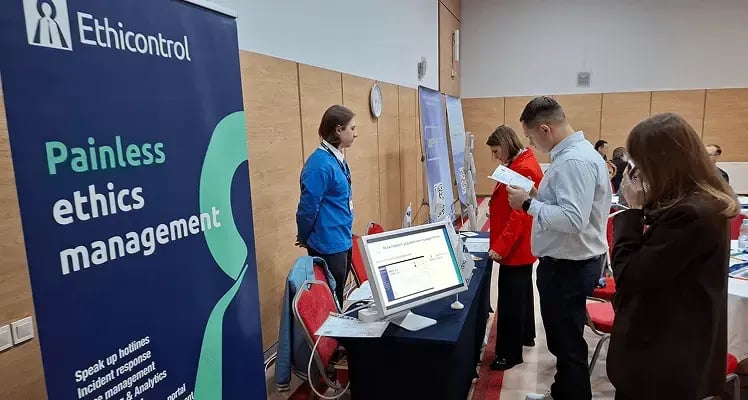
Ethicontrol showcased its audit and risk management solutions, including a whistleblower management platform and a case management system. Our booth attracted internal audit, risk management, and corporate compliance professionals, eager to explore effective control and monitoring mechanisms.
We engaged in discussions on financial transparency, risk management, and compliance with international audit standards. Key topics included:
-
Process automation
-
AI applications in internal audit
-
Building a culture of trust within organizations
Overall Impression
The "AUDIT & RISK INNOVATIONS – 2025" conference provided an excellent opportunity to exchange insights with industry experts and explore the latest trends in financial control and corporate governance.
We highly value the chance to participate in discussions, address modern audit challenges, and present our risk management automation solutions.
A big thank you to the organizers for the invitation and to all the attendees for their interest in our solutions. We believe that such events play a crucial role in advancing audit and risk management culture in Ukraine, fostering stronger collaboration between businesses, the public sector, and the professional community.
Share blog post:


Sources:
1. The photo from the conference is taken from the Business-Format Group Facebook page